
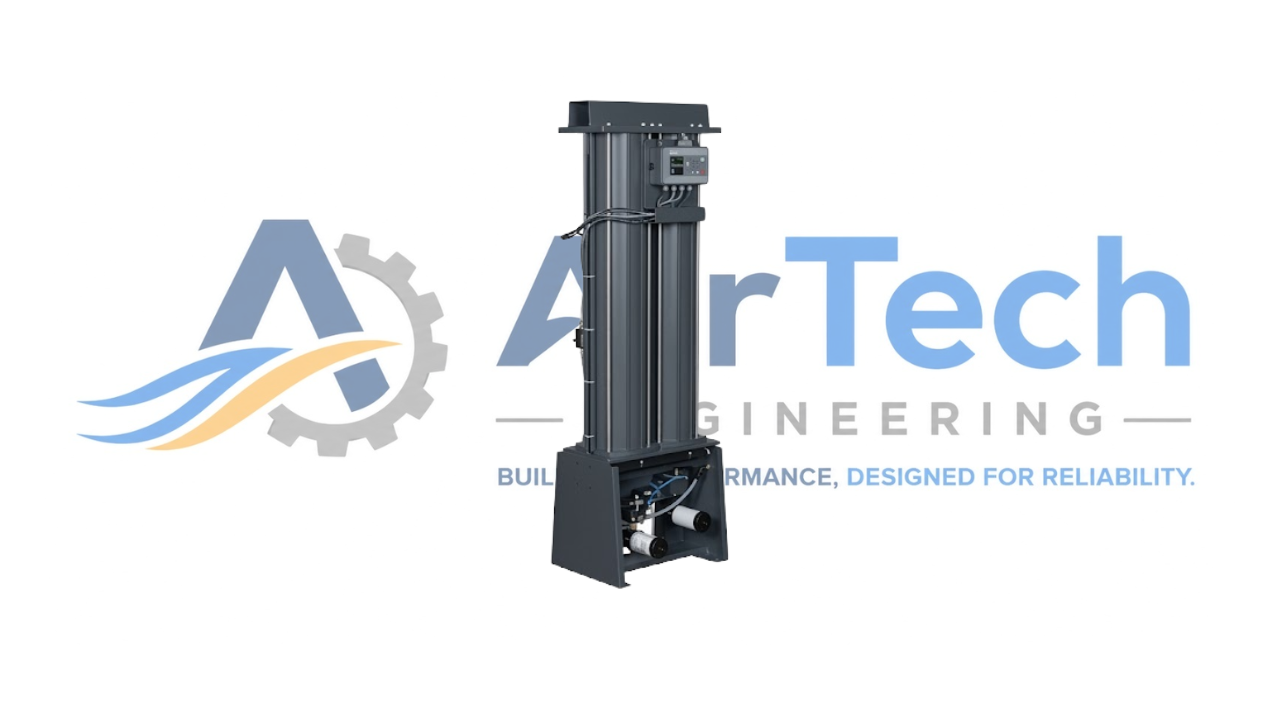
HEATLESS ADSORPTION DRYER
ultra-dry, ultra-reliable.
A Heatless Adsorption Dryer — also called a desiccant dryer or PSA (Pressure Swing Adsorption) dryer — uses a bed of granular desiccant to chemically bind water vapour from compressed air, achieving dew points as low as –70°C without any external heat source. Where a refrigerated dryer can only reach +3°C PDP, a heatless dryer goes far beyond — delivering instrument-quality, bone-dry air for the most critical processes.
Our heatless dryers use a twin-tower design: one tower adsorbs moisture while the other regenerates using a small purge of dry air. The cycle switches automatically every few minutes, delivering continuous dry air 24×7. No steam, no heaters, no moving parts in the desiccant bed — just clean, reliable drying with minimal maintenance.
HEATLESS PRODUCTS
a complete desiccant dryer family.
Our heatless dryer range covers every scale of operation — from compact skid-mounted units for small workshops to large industrial systems with dew-point demand controls for high-flow applications. All models share the same twin-tower PSA principle and are available with three desiccant types matched to your required dew point and operating conditions.
Each model is available with a stainless-steel desiccant vessel option for corrosive-environment duty and a high-pressure variant up to 16 bar for applications like instrument air, nitrogen generation pre-treatment and breathing-air systems.
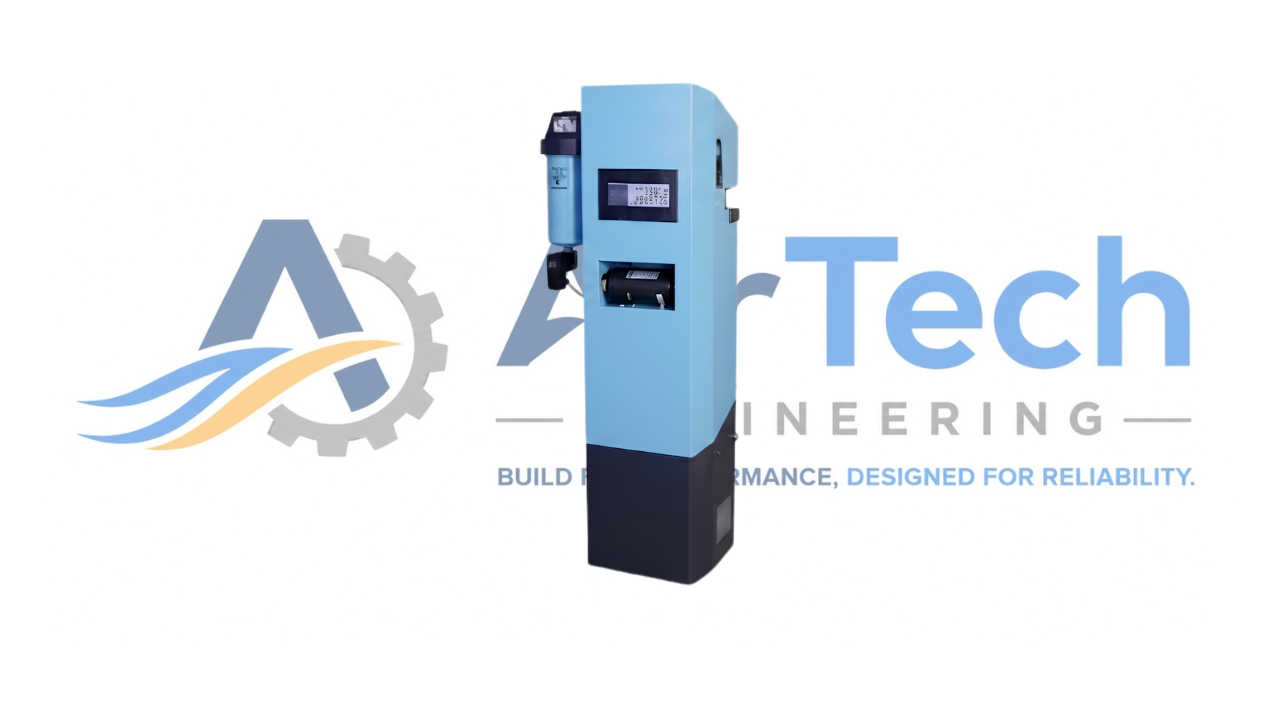
THE TWIN-TOWER PSA CYCLE
one tower dries while the other recharges.
Pressure Swing Adsorption (PSA) is the science that makes heatless drying possible. Understanding the cycle helps you see why it delivers uninterrupted dry air with no heat input.
ADSORBING
Wet compressed air passes up through the desiccant bed. Water molecules adhere to the desiccant surface. Dry air exits from the top at the set dew point.
AUTO SWITCH
EVERY 5 MIN
REGENERATING
A small stream of dry purge air (typically 15–18% of rated flow) is directed through the saturated bed at low pressure, stripping absorbed moisture and venting it to atmosphere.
Wet Air Enters Tower A
Pre-filtered, saturated compressed air enters the bottom of Tower A at line pressure (up to 16 bar). The desiccant bed is freshly regenerated and ready to adsorb.
Adsorption Phase
Water vapour molecules are attracted to and held on the vast internal surface area of the activated alumina or molecular sieve desiccant granules. Dry air (–40°C or –70°C PDP) flows out the top.
Purge Regeneration
Simultaneously, Tower B — which just finished its adsorption cycle — is depressurised. A fraction of the dry outlet air is diverted back through the saturated bed at atmospheric pressure, desorbing the trapped water.
Re-pressurisation
Before Tower B takes its turn drying, it is gently re-pressurised with dry air to match system pressure. This prevents pressure shock to the desiccant bed and downstream equipment.
Automatic Switchover
The timer or dew-point controller opens and closes the inlet/outlet valves to switch roles. Tower B now adsorbs, Tower A regenerates. The cycle repeats continuously — 24×7, unattended.
ENGINEERED FOR CRITICAL DRYING
when ordinary dryers simply aren’t enough.
Dew Point to –70°C
Achieves pressure dew points of –40°C (standard activated alumina) and –70°C (molecular sieve grade) — far beyond the reach of any refrigerated dryer. Prevents moisture freeze-up in sub-zero environments and instrument air lines.
Zero External Heat Input
Regeneration uses only the energy already present in the compressed air — no steam, no electric heaters, no hot-water circuits. Lower operating cost and zero fire risk in ATEX / hazardous-area installations.
Continuous 24×7 Dry Air
Twin-tower design ensures uninterrupted dry air supply at all times. There is no off-cycle or regeneration gap — one tower always delivers while the other recharges. No production stoppages.
Timer / Dew-Point Control Options
Basic models use a fixed timer (5 min/cycle). Advanced models add a dew-point demand controller that only triggers regeneration when the desiccant is actually saturated — cutting purge air loss by up to 40%.
Three Desiccant Grades
Choose Activated Alumina (general-purpose, –40°C PDP), Silica Gel (low humidity loads, –40°C PDP) or Molecular Sieve 3A/4A (ultra-low –70°C PDP for pharma & instrument air). Genuine replacement desiccant stocked.
Low Maintenance, Long Life
No compressor, no refrigerant, no cooling water. Only serviceable parts are the inlet/outlet directional valves and the desiccant bed (recharge every 3–5 years). Minimal downtime, predictable AMC cost.
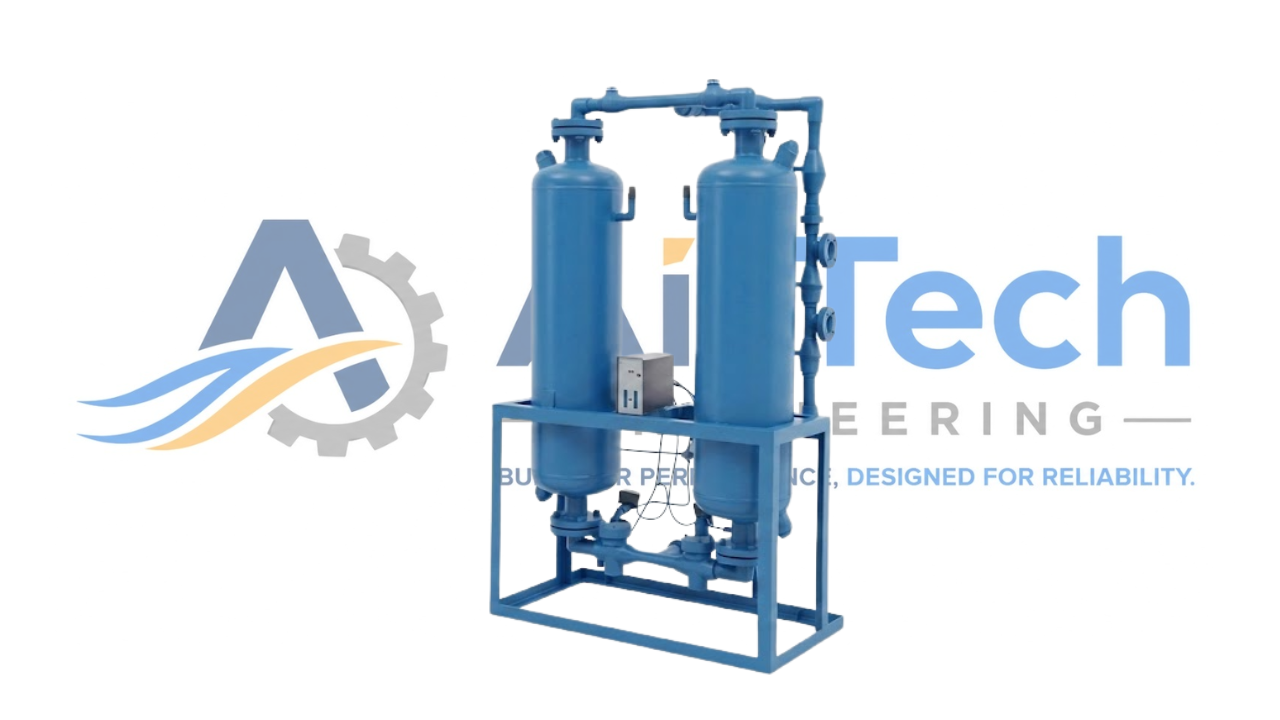
BUILT TO SPEC,
delivered to perform.
| Flow Capacity | 10 – 5,000 CFM |
| Pressure Dew Point | –40°C to –70°C PDP |
| Working Pressure | 16 – 40 bar |
| Cycle Time | 5 min / tower (standard) |
| Purge Air Consumption | ~15% of rated capacity |
| Desiccant Media | Activated Alumina / Silica Gel / Mol. Sieve |
| Vessel Material | MS Epoxy / SS 304 / SS 316 |
| Control Type | Timer / Dew-Point Demand / PLC+HMI |
HEATLESS DRYER vs REFRIGERATED DRYER
know which one your process needs.
| Parameter | Heatless Adsorption Dryer | Refrigerated Dryer |
|---|---|---|
| Pressure Dew Point | –40°C to –70°C | +3°C to +10°C |
| External Heat / Power | None required | Refrigeration compressor (electricity) |
| Sub-Zero Performance | ✓ Excellent (no freeze risk) | ✗ Air lines can freeze at <3°C ambient |
| Purge Air Loss | ~15% of rated flow | Zero |
| Best For | Pharma, instrument air, electronics, outdoor pipelines, paint booths | General manufacturing, pneumatic tools, food packing (moderate humidity) |
| Operating Cost | Low (purge air only — no electricity for drying) | Moderate (refrigerant compressor runs continuously) |
| Maintenance | Desiccant recharge every 3–5 yrs | Annual refrigerant check, condenser clean |
WHERE THE DRIEST AIR IS NOT OPTIONAL
critical processes depend on it.
Pharmaceuticals
Tablet presses, blister packaging, sterile fill-finish, fermentation vessel blanket gas
Electronics & PCB
Wave soldering, SMT pick-and-place, conformal coating, clean-room air supply
Instrument Air
Control valves, pneumatic actuators, I/P transducers and DCS/SCADA instruments requiring ISA S7.0.01 quality air
Painting & Coating
Spray booths, powder-coat guns, robotic painting cells where moisture causes fisheye & adhesion failure
Food & Beverage
Product-contact air for filling lines, PET blowing, biscuit cooling conveyors where moisture causes spoilage
Outdoor & Cold Climates
Any compressed-air distribution system exposed to ambient temperatures below 0°C where +3°C PDP from a refrigerated dryer still freezes in the pipe